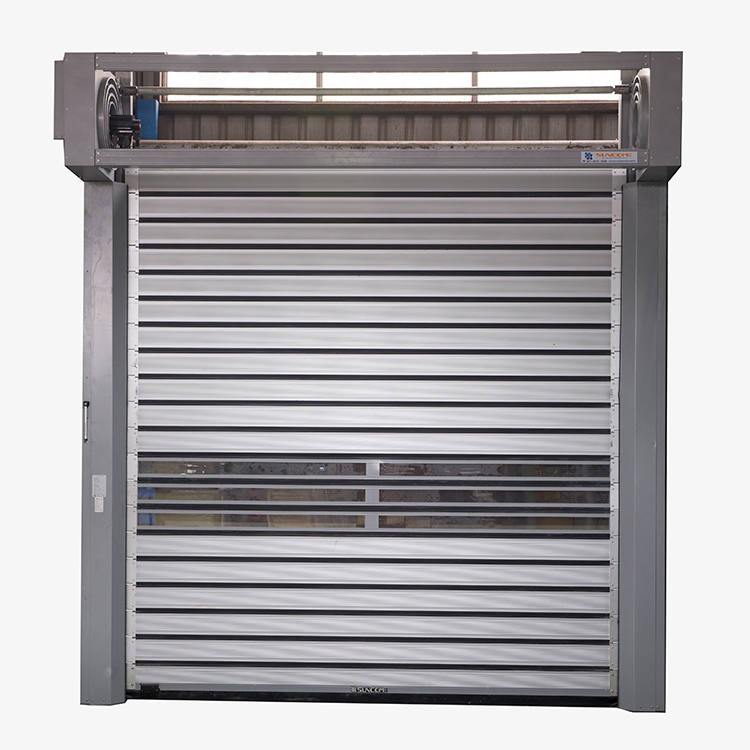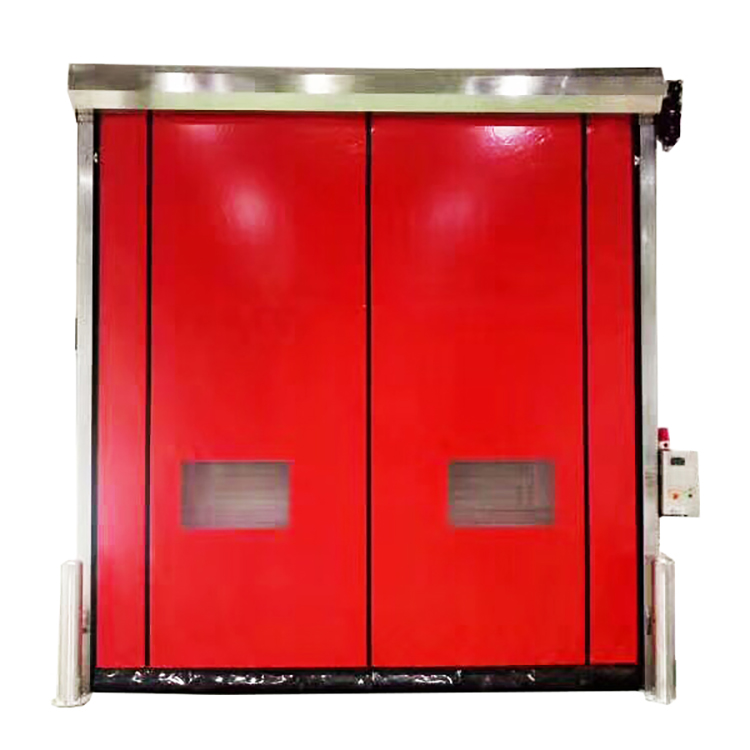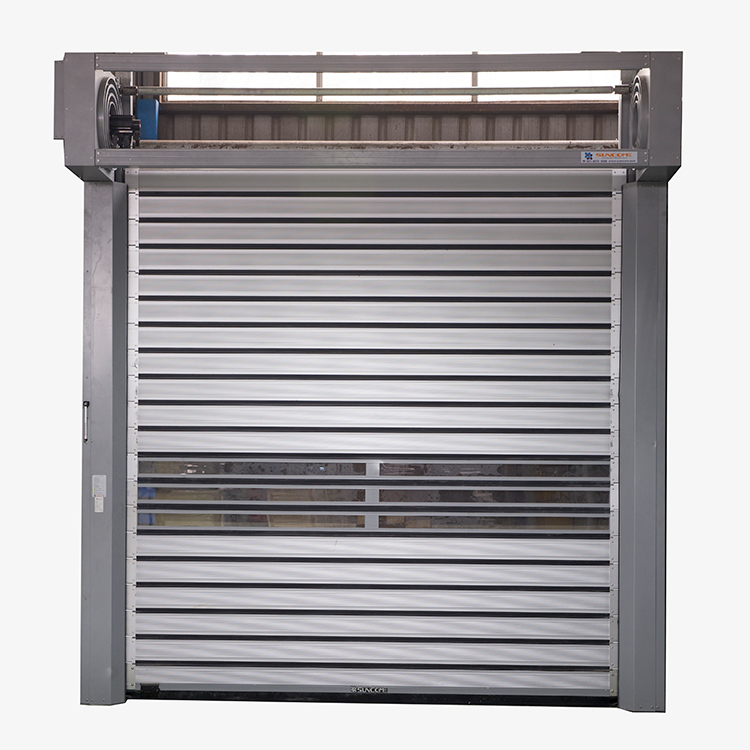
In many factories, warehouses, food processing plants, and logistics hubs, the real problem is not simply opening and closing an entrance. The deeper issue is how to keep traffic moving quickly without sacrificing cleanliness, temperature stability, safety, and daily operating control. A High Speed Door is designed to solve exactly that conflict. Instead of forcing businesses to choose between efficiency and protection, it creates a practical balance between both.
For project owners and facility managers, delays at door openings often become an invisible cost. Forklifts slow down, conditioned air escapes, dust enters controlled zones, and repeated collisions damage ordinary doors far earlier than expected. This is why more industrial buyers now look for fast, durable door systems that fit real working conditions rather than generic entry solutions. As a manufacturer serving industrial access needs, Everbesten Industrial Limited Co., Ltd. understands that customers are not only buying a door. They are buying smoother workflow, lower waste, and more confidence in daily operations.
This article explains how a High Speed Door helps businesses address common operational pain points such as energy loss, traffic bottlenecks, contamination risk, unstable indoor environments, and maintenance pressure. It also compares high speed doors with conventional door types, outlines key selection points, and answers practical buyer questions so decision-makers can choose a more suitable solution for their facility.
Many industrial facilities do not notice the full cost of an unsuitable door until inefficiency becomes routine. A doorway is crossed dozens, hundreds, or even thousands of times a day. When that opening is too slow, too fragile, or too exposed, the consequences show up everywhere: in higher utility bills, delayed internal transport, product contamination, temperature fluctuation, and frustrated staff.
A High Speed Door is built to reduce those repeated losses. Because it opens and closes rapidly, it shortens the time that an opening remains exposed. That matters in temperature-controlled workshops, dust-sensitive production areas, loading transitions, and high-traffic logistics routes. The improvement may look simple from the outside, but operationally it can be significant.
The most common customer concern is not “Do I need a door?” but rather “Why is my current door slowing everything down?” That is the right question.
In short, a High Speed Door addresses the weak point between spaces. Whether the goal is separation, speed, safety, or cleanliness, the door becomes an active part of process control instead of a passive barrier.
The real value of a High Speed Door appears when daily movement is constant. Fast opening and closing helps vehicles, goods, and people pass through more smoothly. At the same time, the short open duration limits unnecessary exchange between two environments. That can support cleaner production, more stable internal temperatures, and better use of conditioned air.
Another important advantage is workflow rhythm. In a busy warehouse, even a small delay at each passage adds up over the course of a shift. A faster door reduces stop-and-go movement and supports more natural circulation. This is especially useful in facilities where internal logistics depend on timing.
Buyers also appreciate that a High Speed Door can often be adapted to specific conditions, such as frequent usage, interior partitioning, loading access, or special hygiene requirements. Instead of accepting a one-size-fits-all entry point, companies can choose a system that better reflects how the space is actually used.
Traditional industrial doors still have their place, but they are not always the best answer for facilities with intensive movement or stricter environmental control. Some conventional doors are strong but slow. Others are affordable at first but costly to operate over time because they interrupt traffic, allow environmental leakage, or require frequent repairs after impact.
| Comparison Point | High Speed Door | Traditional Industrial Door |
|---|---|---|
| Opening and closing efficiency | Designed for rapid cycling and repeated daily use | Often slower, especially in high-frequency access areas |
| Traffic flow support | Helps reduce waiting time for forklifts and workers | Can create congestion during peak movement periods |
| Environmental separation | Shorter open time helps reduce dust, drafts, and temperature exchange | Longer exposure can weaken climate and cleanliness control |
| Suitability for controlled areas | Well suited for workshops, food zones, logistics passages, and partitions | May be less effective where quick closure is essential |
| Operational image | Modern, efficient, and process-oriented | Functional, but often less responsive in fast-paced environments |
This comparison is why many buyers no longer evaluate a door only by initial price. They also look at movement efficiency, indoor stability, and the effect on daily operations. A lower-cost door that slows production or increases environmental loss may not remain the better option for long.
Not every High Speed Door should be selected in the same way. The right choice depends on where it will be installed, how often it will be used, and what kind of pressure the opening faces every day. Some projects need interior speed and hygiene control. Others need stronger resistance for larger exterior openings. A smart buying decision starts with application logic, not just catalog photos.
Before placing an order, buyers should think through several practical points. Will the door be used between clean and non-clean zones? Is there frequent forklift traffic? Does the site require better temperature retention? Is the opening exposed to outdoor wind, dust, or rain? How much uptime matters if the door is hit or used continuously?
| Selection Factor | Why It Matters |
|---|---|
| Installation location | Interior and exterior openings may need different structural and sealing priorities |
| Traffic frequency | Heavy daily cycling calls for reliable and responsive performance |
| Environmental condition | Dust, humidity, hygiene, and temperature control affect the best material and design choice |
| Opening size | Larger openings require proper structural planning and door configuration |
| Safety expectation | Sensor options and smooth operation are important where people and vehicles cross often |
| Maintenance convenience | A more suitable system helps reduce downtime and long-term service pressure |
Buyers who take time to match the door to the real workflow usually achieve better results than those who choose only by appearance or budget. A High Speed Door performs best when it is selected as part of the facility process, not as an afterthought.
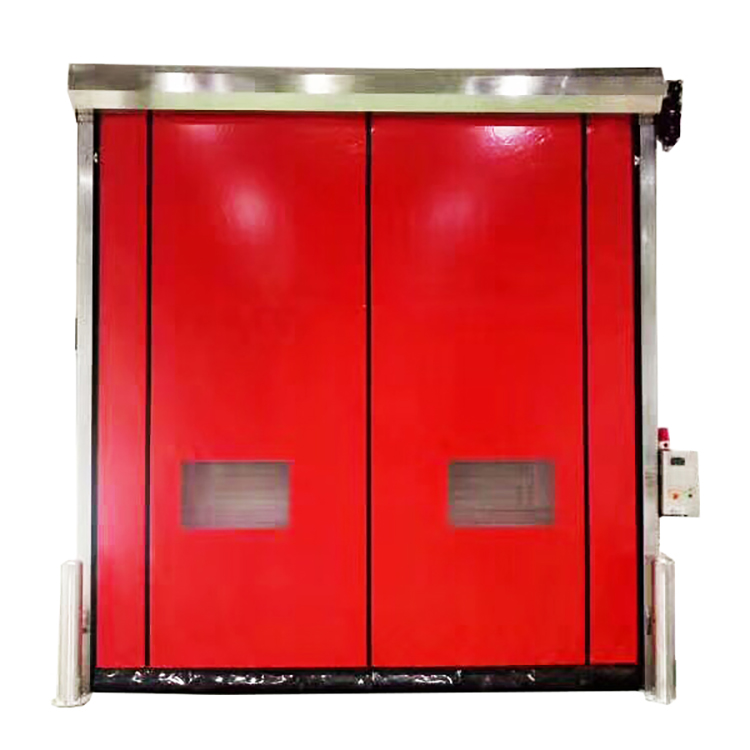
A High Speed Door is useful in many industries because the underlying need is universal: move quickly, protect the interior, and reduce unnecessary interruption. The exact benefit changes from one application to another, but the principle remains the same.
In logistics centers, the priority is movement efficiency. In food production, it may be hygiene and separation. In manufacturing, the focus may be workflow continuity and environmental control. In warehouses, buyers often care about both access speed and indoor condition management.
This broad application range is exactly why more project planners are moving toward specialized fast-cycle doors. A High Speed Door is not limited to one narrow industry. It is a practical answer wherever repeated access creates avoidable friction.
Is a High Speed Door suitable for both interior and exterior use?
Yes, but the configuration should match the application. Interior installations often prioritize cleanliness, traffic speed, and environmental separation, while exterior openings may require stronger structural performance and better resistance to changing site conditions.
Can a High Speed Door help reduce energy waste?
It can help reduce unnecessary air exchange because the door stays open for a shorter period. This is particularly useful in spaces where indoor temperature stability matters for comfort, storage, or production consistency.
Why do warehouses prefer a High Speed Door over slower door systems?
Warehouses usually deal with repeated movement throughout the day. A fast door supports smoother forklift access, lowers waiting time, and helps prevent the doorway from becoming a bottleneck during busy shifts.
What should buyers prepare before requesting a quotation?
It is helpful to provide opening size, installation location, usage frequency, indoor or outdoor conditions, and the main operational challenge you want to solve. The clearer the application, the more suitable the recommendation will be.
Is a High Speed Door only for large factories?
No. It is also useful for medium-sized workshops, specialized processing rooms, commercial back-of-house operations, and any facility where repeated access affects efficiency or environmental control.
Choosing the right High Speed Door is really about choosing a better way for your facility to operate. When the door performs well, traffic becomes smoother, indoor conditions become easier to manage, and the whole site feels more controlled and professional.
If you are planning a new facility, upgrading an existing opening, or comparing solutions for warehouse, workshop, or industrial access points, Everbesten Industrial Limited Co., Ltd. is ready to help you evaluate the right option for your application.
Ready to improve movement efficiency, environmental separation, and daily reliability at your site? Contact us now to discuss your project and get a tailored solution built around your actual operating needs.